Sunday, March 6, 2022

Illustrations of Officers' Servants 1755-1783

Officers in the 18th Century were often attended by servants, and their dress is a fascinating study.  All images are contemporary 18th Century paintings with information where applicable.  Clicking on an image will enlarge it.

1752 "William Kerr, 4th Marquis of Lothian" by David Morier.

This Marquis of Lothian held commissions as Colonel of the 24th Regiment of Foot and as Colonel of the 11th Dragoons.  He is wearing the uniform of the 24th Foot.  What is of interest to this discussion is the young man just to the left of the horse.  He wears a short white coat with white breeches and stockings.  Underneath the coat is a blue waistcoat (presumably) and very unusual yellow garment.  The yellow garment could be a waistcoat but it has fringe at the ends, along with gold embroidery.  It is also possible that it is a type of apron instead.  His cap is of a type similar to that worn by dragoon musicians.  It bears a sun in splendor under a crown, and has white scrollwork on either side and is trimmed with yellow feathers and a black plume.  The young fellow carries a stick with a silver head and not an instrument--an odd omission if he is intended to depict a member of the regimental band.


1780 "George Washington" by John Trumbull.  

In this painting, George's horse is held by a servant, who is possibly William "Billy" Lee.  He wears a red turban with a red plume.  His jacket is dark blue with red cuffs and his waistcoat is red.  Unfortunately, the large horse obscures the rest of the detail.  It is fairly likely, however, that his breeches and stockings are dark as well.


1781: "Marquis de Lafayette" by Jean-Baptiste LePaon.  
The other person is often identified as James Armistead Lafayette, for no discernible reason.  He is more likely a local individual assigned to serve Lafayette in a personal capacity, rather than an espionage capacity.  He wears a hussar-inspired uniform, with high tan boots, tight red pants, and a silver and red barrel sash.  His jacket is red with green cuffs and silver lace, with a black hat decorated with red, white, and green plumes.  He is equipped with a green cloak, a sword, and another crossbelt, the purpose of which is unknown.


1781: "Death of Major Peirson at the Battle of Jersey".  Perhaps the most famous illustration of an officer's servant shows the servant of Major Peirson firing away doggedly at the onrushing French troops. He wears a short navy blue jacket with yellowish cuffs and collar and silver epaulette.  His waistcoat (two rows of buttons) and breeches are yellowish-tan. Grey stockings and black shoes cover his legs.  He wears a yellow and blue striped sash and a black hat with yellow, blue, and black plumes.

1782: "The Earl of Aldborough reviewing volunteers" by Francis Wheatley.  At least one servant is pictured, sitting behind the center carriage.  He wears a white turban, blue jacket with white collar, adorned with an silver epaulette and silver-laced buttonholes, buff breeches, white stockings and brown shoes.  The epaulette, setting, and general similarity to other officers' servants' uniforms suggests that he also performs this duty.


Sunday, September 13, 2020

British Officers of the French & Indian War from Contemporary Pictures

This is a gallery of portraits of British officers during the French & Indian War.  Since these portraits were painted from life, there are interesting regimental distinctions illustrated.  This is by no means an exhaustive list, but hopefully will prove interesting and a springboard for further research.

17th Regiment of Foot: Lieutenant-Colonel Robert Monckton.  He wears a non-regulation waistcoat, most likely one that is white.


27th Regiment of Foot.  Colonel William Blakeney.


35th Regiment of Foot: Lieutenant-Colonel Henry Fletcher (photo originally from The 35th Project https://web.archive.org/web/20120417165337/http://www.btinternet.com/~the35thfootproject/index.html.)  Fletcher's portrait is likely from the 1760s or later because of the epaulette, narrow lapels, and light waistcoat.


40th Regiment of Foot.  Captain George Scott.


42nd Regiment of Foot.  Captain John Campbell.  This portrait dates after the 42nd was awarded the title of the Royal Highland Regiment in July 1758.  As part of this honor, their facings were changed from buff to blue, as seen in this portrait.


47th Regiment of Foot: Captain Roger Morris.  Since Morris' painting shows an epaulette, it may date to the 1760s.  However, the cut of the lapels has not been updated to that seen in Fletcher's portrait.  Similar to Lieutenant-Colonel Monckton, Captain Morris also wears a white waistcoat.


48th Regiment of Foot:  Captain Gabriel Christie.  Note the buff waistcoat.


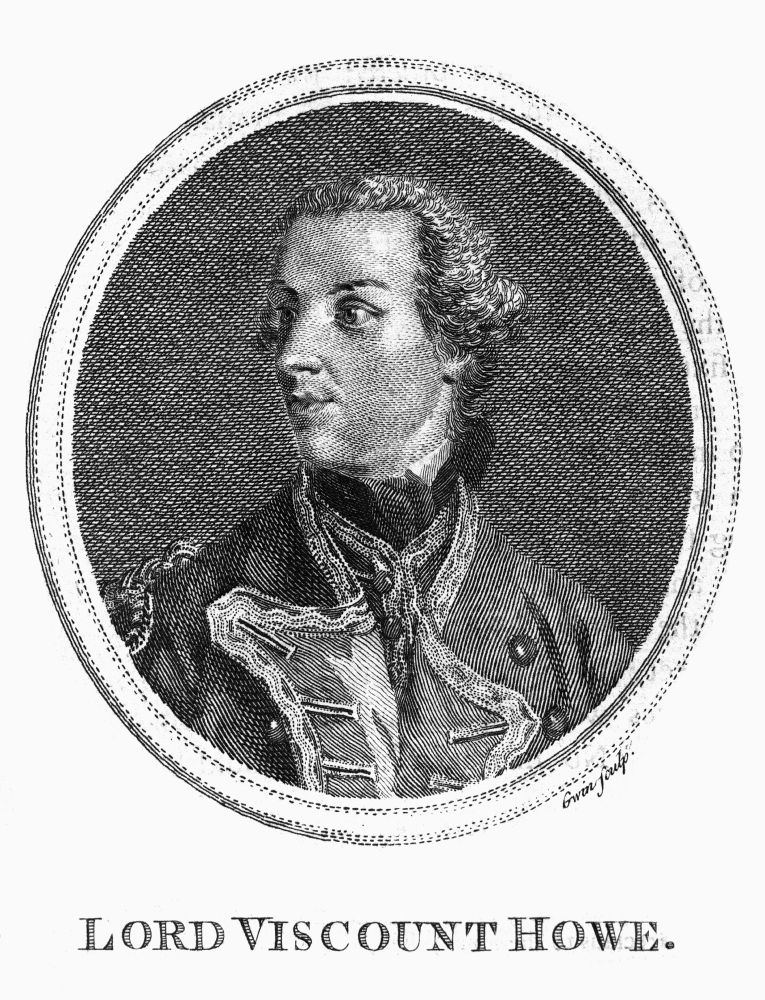
55th Regiment of Foot.  Colonel George Augustus, Viscount Howe.  This most likely shows him in the uniform of the 55th Regiment of Foot.  It is possible that this illustration shows him as colonel of the 60th Regiment, but it appears that the 60th's officers did not wear buttonhole lace.


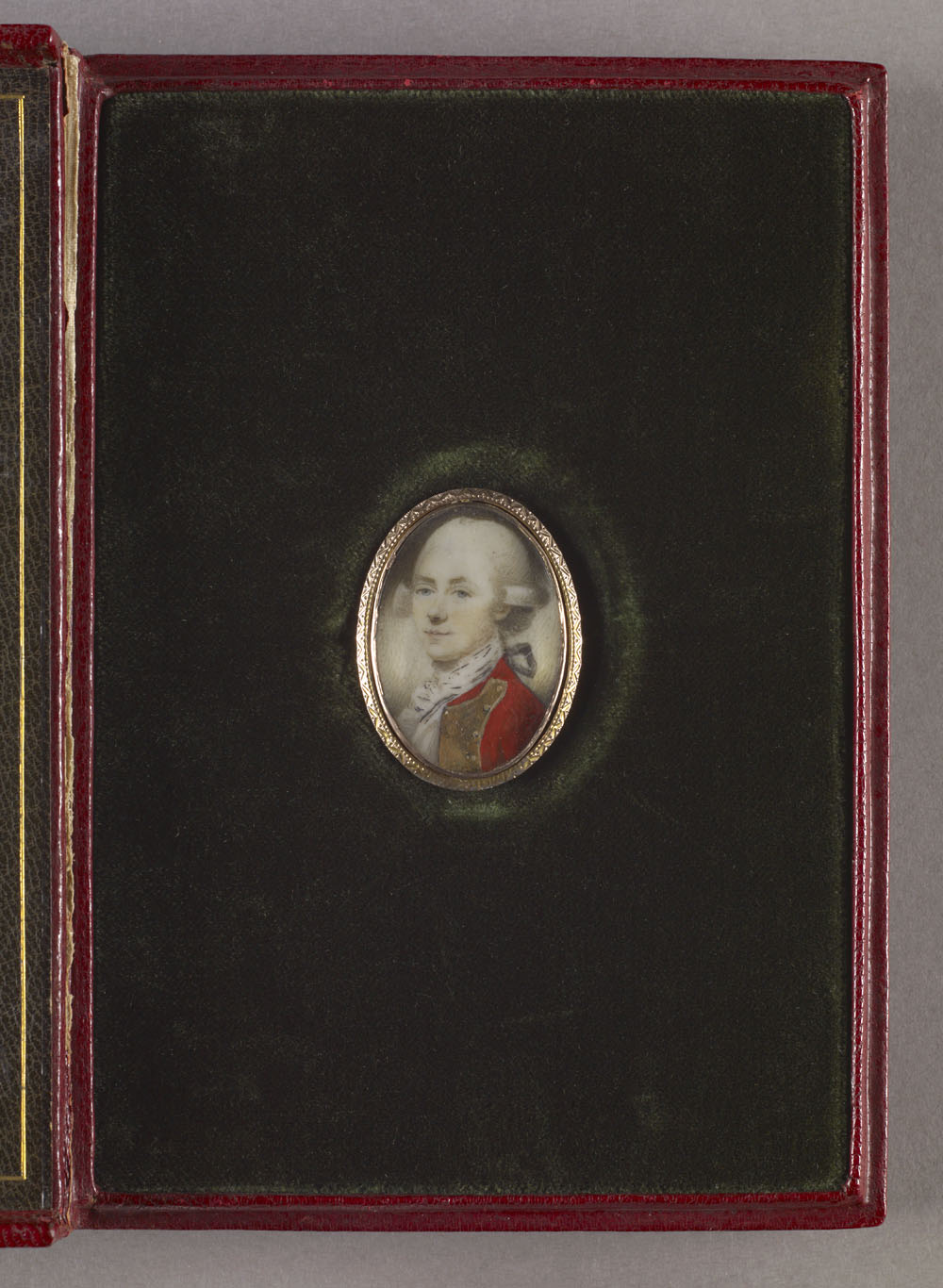
58th Regiment of Foot.  Lieutenant-Colonel William Howe. (Photo from Archives Canada https://collectionscanada.gc.ca/pam_archives/index.php?fuseaction=genitem.displayEcopies&lang=eng&rec_nbr=2834245&title=General%20Sir%20William%20Howe.&ecopy=c096944k)


60th Regiment of Foot.  Jeffrey Amherst, possibly as colonel of the 60th Regiment of Foot.  Alternately, this portrait may illustrate a general's "undress" uniform.


Monday, July 27, 2020

Flags of Narnia: The Lion, The Witch and the Wardrobe (2005)


In the 2005 movie, The Chronicles of Narnia: The Lion, the Witch and the Wardrobe, great care was taken to recreate the world of Narnia, its creatures and their cultures.  Much detail was lavished into this movie.  This post is a spotlight of one of those details: the flags of Aslan's Army during the First Battle of Beruna.  Much is still unknown, and there may be other flags not pictured here.  My hope is that this may serve as a springboard for more analysis.

With Aslan the great Lion dead at the hands of the White Witch, Peter, Edmund, and Aslan's army engage the Witch's army in battle.  Under their gold and red banners, they fight "for Narnia...and Aslan!"


All images gathered from eBay, WorthPoint, or screenshots of the movie.  I claim no copyright on any of them.  Click on them for larger version.


This flag is identified as belonging to the Centaurs of Aslan's army.


 This flag is also identified as belonging to the Centaurs.  Both have the same distinct crossed-sword motif.  This flag is likely suspended from a pole shaped like a T, similar to the yellow-and-red lion flag next.


One of the easiest flags to see in the movie is the pennant attached to the lances of the front rank of Centaurs as they charge home into the Witch's army.  It too bears the crossed-sword motif of the Centaurs.


This is an interesting collection of flags.  I have not found where the lion topper (left) appears in the movie.  The center flag with red lion is clearly visible in some of the long shots of Peter's army.  The bronze lion holding a yellow flag looks like one of those that topped the tents.


A clearer shot of the flag in the center of the photo above.


The unit that this flag identifies is not currently known.  It is clearly one belonging to Aslan's army, however, as it bears the same red-and-gold color scheme as all the rest.


 The "mystery flag" on camera!  It is on the far right of the shot, partially obscured by a Centaur's lance.  It is possible that this flag is carried by the Satyrs, but at present this is uncertain.


A different rectangular flag is visible behind the Satyr blacksmith.  Though the lighting does not allow for much detail to be visible, it does appear to have three horizontal bars (perhaps feathers like the flag above?) running across the first 1/3 of the flag nearest the pole.

This flag is one of my personal favorites: the flag of the Fauns.  In C. S. Lewis's original book, Mr. Tumnus is rather proud of his hooves: "she'll wave her wand over my beautiful cloven hoofs and turn them into horrid solid hoofs like a wretched horse's."  Apparently this pride is shared by most Fauns.


Another flag with the Faun motif.  This one has a distinctive swallowtail shape.


The Faun on the left of the picture carries a banner that is different from the other two above.  This one appears to have three tails.


This yellow flag appears in multiple places around Aslan's camp, as well as during the battle.


No one forgets a Dwarf and certainly not the propmakers!  The Dwarfish archers on the ridge have their own flag in matching colors with the rest of the army.  It bears their device of crossed hammers, reflecting their skill at smithcraft.


The flag behind this female Centaur looks like another angle of the Dwarf flag shown above, though detail is difficult to see.  The yellow hammer head is just visible behind the Centaur's forehead.


The female Centaurs themselves carry three red-and-yellow flags while positioned on the ridge behind Edmund.  They all have a yellow hoist edge (the edge nearest the pole) and a swallowtail-shaped red field.  Though detail is difficult to pick out, they appear to also bear the Centaurs' crossed-sword device.


Saturday, May 2, 2020

Flags for Wargamers

It has been rather quiet here at DtL, for the author has been very busy with other things. Some of you may know that I run a small business, Through All Ages LLC.  Recently, Through All Ages has been creating flags for wargamers.  Many of my readers have come to this blog looking for historical military flags, of which there are a few recreations on my blog (to see all of them, go to: http://defendingthelegacy.blogspot.com/search/label/Flags).


Now my flag-making endeavors have moved to Wargame Vault.  Some are free (such as the 1745 Appin Stewart flag at the top of the post), and some are for sale (like the collection illustrated left, with flags of all Hesse-Kassell regiments deployed to North America 1776-1783).  Visit https://www.wargamevault.com/browse/pub/14586/Through-All-Ages-LLC to learn more.  And if you have a historical flag you would like to add to your armies, let me know and I will see what can be done...

Wednesday, September 11, 2019

Battle of Brandywine Gallery

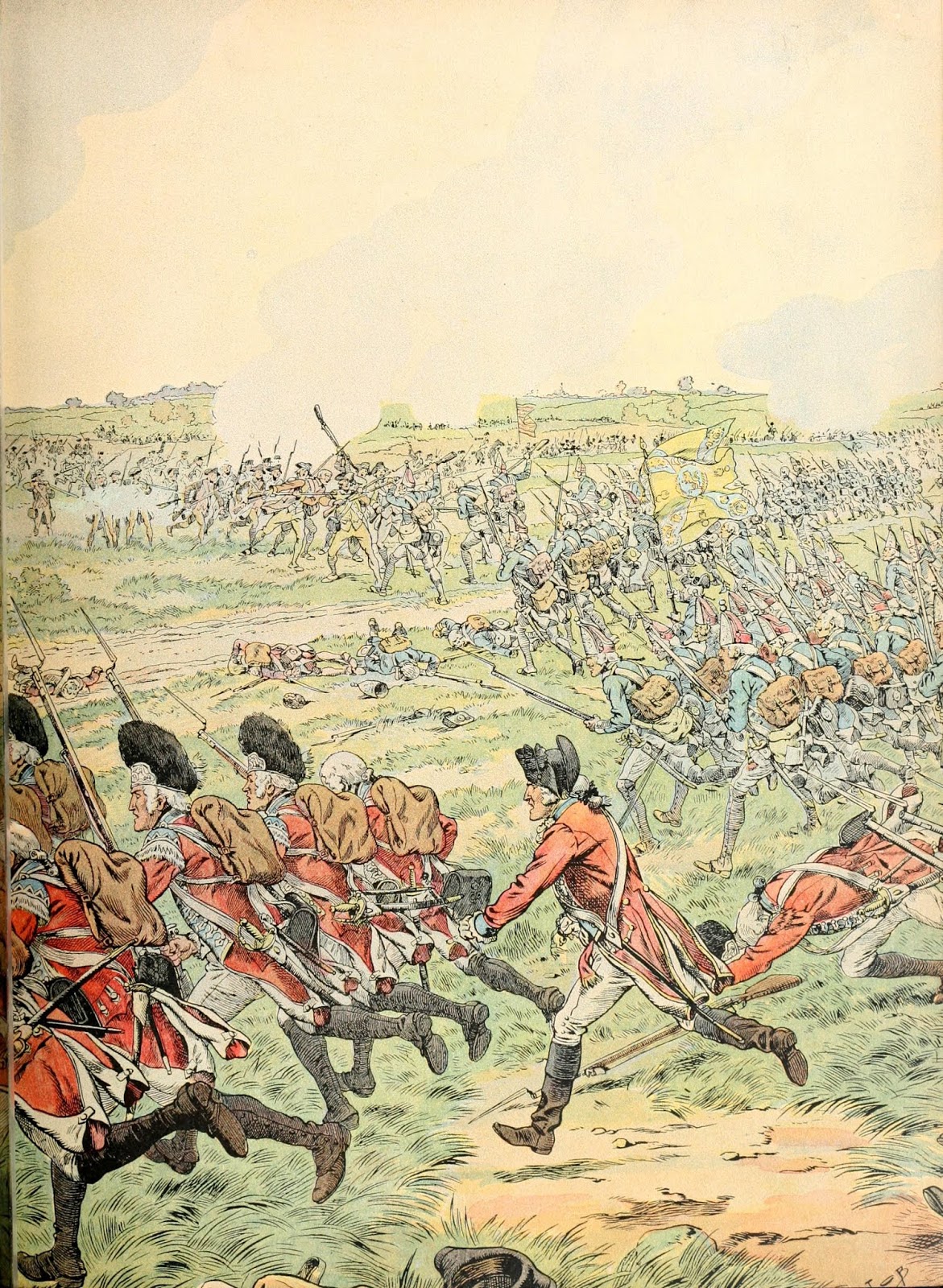
In honor of the 242nd anniversary of the Battle of Brandywine today, I have compiled a gallery of artistic depictions of it.  These are 19th and 20th century illustrations, and usually suffer from  anachronisms.  Please use caution if using them for historical/costume/wargame reference.  However, they are wonderful in capturing a "moment" in time, even if the fine details do not hold up under scrutiny.  Enjoy!

Jacques Onfray de Breville illustrates the attack of the British and Hessian grenadiers.  These two are pieces of the same painting, but as it was an illustration, about 1/4" of the middle was lost in scanning.

F. C. Yohn shows a hastily-constructed line of American troops attempting to stem the tide of the British outflanking attack.

Arthur Becher shows the moment when Washington and his staff received news that the British attack had crumpled the American lines.

As the British surged onward towards victory, a young major general named the Marquis de Lafayette attempted to rally the Americans to halt the British.


In this painting by E. Percy Moran, Lafayette looks like he has single-handedly changed the tide of the battle.  Unfortunately, that was not the case.


Frank E. Schoovener shows Lafayette and a rag-tag group of Americans advancing into the fog of war.  I previously identified this flag as a composite of other flags.  This was erroneous.  The flag is actually copied directly from a surviving artifact.  (Seen at https://www.8thvirginia.com/blog/the-triumphant-return-of-legendary-flag)  This flag was in a private collection until its sale in 2012.  Mr. Schoovener must have had excellent connections to view and copy this flag.


Victor A. Searles' illustration is a bizarre hodge-podge of 18th Century costume, but does capture the impression of a close-quarters melee.

Monday, February 18, 2019

Review of The War for America 1775-83 by Piers Mackesy


I will begin with the end summary first: this is one of the best books about the American Revolution that I have read in a long time.  It provides a very nice counterpoint to Matthew Spring’s With Zeal and With Bayonets Only.  While Spring’s work focused on the nitty-gritty of British tactics and soldiers’ experiences, Mackesy gives a global perspective on the American rebellion.

What is known today as the American Revolution was truly a world war.  Fighting began on Lexington Green in Massachusetts in 1775.  But by the time peace was signed, the war had been waged in Africa, India, the Caribbean, and the seas of Europe.  Though many of these operations are mostly forgotten today, Mackesy fits all of them into the grand strategic plans formed by the leaders in London.  However, events rarely conformed to their plans, and the decisions taken by commanders on the spot (both on land and sea) are also examined.

But this book is not just a sweeping campaign narrative.  It is also the personal story of men tasked with leading their country through a difficult war.  The decisions and personalities of Lord North, Lord Sandwich, and Lord George Germain (not to mention King George III) are just as important to the story as the movements of fleets and armies.  How they each influenced the war is a major part of the book.

The Royal Navy forms a large part of Mackesy's book


To create a book with any kind of biographical content (or even history in general) usually requires digging deep into primary sources, and Mackesy has done so.  Page after page contains footnotes to letters or reports from the War Office, or the Foreign Office, or a host of other sources.  It is impressively researched.  The only minor criticism is that his sources are overwhelmingly British ones.  Few rebel or French, or even Loyalist sources for that matter, are used.  However, his story is that of Great Britain fighting to save her empire, and so probably does not require as many sources from other perspectives.
  
To anyone with an interest in the American Revolution, I would highly recommend this book.  It is a detailed look at the British strategy during the war, so it can be a little slower than other books at some parts.  However, this book’s wealth of information well repays any effort put into it.

5/5 stars.

Friday, October 19, 2018

Yorktown Gallery by Howard Pyle

On this day, Lord Cornwallis surrendered his post at Yorktown to General George Washington and the Comte de Rochambeau.  These illustrations are Howard Pyle's imagining of the events on this climactic battle of the American Revolution.


The first illustration shows George Washington firing the first cannon against the fortifications of Yorktown.

American and French artillerymen continued to bombard the British in Yorktown.  In the second illustration, Washington and his ally Rochambeau inspect Yorktown and plan their next move.

That next move would be an infantry assault against two small fortifications known as redoubts.  The attack was well-planned and succeeded in capturing these two posts in less than thirty minutes.  During these attacks, there was fierce hand-to-hand combat.  Unlike many battles of the 18th Century, officers could cross swords with each other.


On October 19, Cornwallis surrendered to the combined French-American force.  This would be the last major action in the American Revolution.

Wednesday, June 20, 2018

Christianity and History


George Marsden.  Still from video by Regent University.
https://www.youtube.com/watch?v=kZkGVBOdg9Q
How does a strong Christian faith influence the work of a historian?  First of all, Christians who study history acknowledge God’s sovereignty and guidance over all the universe, including the affairs of men.  It may be objected that this approach forces historical facts into an ideological viewpoint.  However, everyone who studies history comes with a certain frame of reference.  “The best way to deal with these universal phenomena,” writes George Marsden, a leading Christian historian, “is to acknowledge one’s point of view rather than posing as a neutral observer.  That way readers can take an author’s viewpoint into account, discount it if they wish, and learn from it to the extent they can.” [1]


The weather at Dunkirk is as providential as the arrangement
of Saturn's rings. (Public Domain)

A major part of a Christian historian’s viewpoint is acknowledging the role of providence in historical events.  Question and answer 8 of the Westminster Shorter Catechism defines providence as God’s “most holy, wise and powerful preserving and governing all His creatures and all their actions.” [2] Since God directs the universe and the actions of those within it, this means that He has decreed the paths that history will take.  While some people separate providential events (like the weather at Dunkirk that aided a British escape) from ordinary events, the truth is that all events are equally controlled by God.  “The weather we actually had is therefore in the strictest sense providential; it was decreed; and decreed for a purpose, when the world was made—but no more so (though more interestingly to us) than the precise position at this moment of every atom in the ring of Saturn.” [3]


However, acknowledging God’s providential guidance of events does not always mean that we understand why historical events happened in a particular way.  Because we are God’s creatures, not His counsellors, we ultimately cannot know God’s purposes, aside from those that He has revealed to us in the Bible.  Some Christian historians attempt to understand God’s plan as it is revealed in history, and this is a commendable exercise, as long as they realize that they are limited to speculation.  In The Lord of the Rings, the wise wizard Gandalf understands that everyone, including himself, has limitations and cannot know everything.  “For even the very wise,” Gandalf tells Frodo, “cannot see all ends.” [4]
Gandalf and Frodo in grave discussion.  Picture from Time Magazine
http://time.com/4650389/ian-mckellen-gandalf-lord-of-the-rings-memories/


Even though we cannot know everything, we can still apply God’s principles of right and wrong to historical events.  In an effort to avoid using history primarily as a lesson in morality, some people have argued that, when looked at from the position of that person’s era, no action can be classed as right or wrong.  But this position embraces a philosophy that there are no universal principles of good or evil.  Christians, whatever their field of study, have a responsibility to apply the Bible’s ethical standards to history.  This will ensure that they “judge righteous judgment” (John 7:24, King James Version) and “hate the evil and love the good.” (Amos 5:15, King James Version).


Judging with righteous judgment: Jesus and the woman
taken in adultery.  Engraving by Gustave Dore
(public domain)

Christianity should influence every aspect of one’s life, including a study of history.  A Christian historian can study history more richly, because he or she acknowledges the hand of God where others would only see coincidence.  Christian historians can also emulate the virtues of Jesus Christ like humility (acknowledging that we do not know the mind of God) or justice (judging the events of the past with the Bible’s ethical code).  In short, Christian history is merely an outworking of our internal change: “Therefore if any man be in Christ, he is a new creature:  old things are passed away; behold, all things are become new.” (2 Corinthians 5:17, King James Version)

References

[1] George M. Marsden.  Jonathan Edwards: A Life.  (New Haven, CT: Yale University Press, 2003), 5.

[2] Westminster Shorter Catechism.  Online.  Accessed June 20, 2018. http://www.reformed.org/documents/wsc/index.html. 

[3] C. S. Lewis.  The Complete C. S. Lewis Signature Classics.  (New York: HarperCollins, 2007), 457.

[4] J. R. R. Tolkein.  The Lord of the Rings: The Fellowship of the Ring.  (New York: Ballantine Books, 1981), 93.

Thursday, April 26, 2018

Courage


Courage.  It is a quality that many admire, but one that can be dangerous for one's well-being or safety.  Too often today we see people buckling under pressure and recanting ideas rather than face opposition.  Two movies offer beautiful examples of characters making the right decision and courageously facing whatever outcome will happen.

The first one comes from the 2005 movie The Lion, the Witch, and the Wardrobe.  After running from the forces of the evil White Witch, Peter Pevensie is forced to make a crucial decision on his own.  Informed that the Witch's army is at hand, Peter must decide to fight or flee.


Peter is ready to enter battle for a free Narnia
But this fateful decision is not for himself alone.  If he decides to stand and fight, Peter must commit the entire free Narnian army, as well as his brother, to a conflict against the numerically superior enemy.  Peter decides to engage in battle, and he positions himself in the front line.  Even though it may cost him everything, Peter Pevensie has the courage to fight for a free Narnia against immense opposition.


A similar selfless courage is found in (of all places) the 1991 animated movie Beauty and the Beast.  In the movie, a self-centered prince is turned into a beast as punishment.  Unless he can learn to love and be loved in return before his enchanted rose dies, he will remain a beast.  Beast falls in love with a girl he imprisoned named Belle, and she begins to see the change in him from selfish to caring.  But at the same time, she desperately wants to see her father again. 


"I release you...you are no longer my prisoner."
Time is now running out fast for Beast: the rose will die in less than 6 hours.  If she can remain with him just a little longer...perhaps he can return to humanity again.  After an internal struggle, Beast tells Belle, "You must go to him...you are no longer my prisoner" and Belle rides off to be reunited with her father.  After his decade-long experience as a monster inside and out, the Beast has the courage to sacrifice his own wishes and desires--in fact, his one chance at returning to humanity--for someone that he loves deeply.


Stand courageously!