Showing posts with label Seven Years' War. Show all posts

Sunday, September 13, 2020

British Officers of the French & Indian War from Contemporary Pictures

This is a gallery of portraits of British officers during the French & Indian War.  Since these portraits were painted from life, there are interesting regimental distinctions illustrated.  This is by no means an exhaustive list, but hopefully will prove interesting and a springboard for further research.

17th Regiment of Foot: Lieutenant-Colonel Robert Monckton.  He wears a non-regulation waistcoat, most likely one that is white.


27th Regiment of Foot.  Colonel William Blakeney.


35th Regiment of Foot: Lieutenant-Colonel Henry Fletcher (photo originally from The 35th Project https://web.archive.org/web/20120417165337/http://www.btinternet.com/~the35thfootproject/index.html.)  Fletcher's portrait is likely from the 1760s or later because of the epaulette, narrow lapels, and light waistcoat.


40th Regiment of Foot.  Captain George Scott.


42nd Regiment of Foot.  Captain John Campbell.  This portrait dates after the 42nd was awarded the title of the Royal Highland Regiment in July 1758.  As part of this honor, their facings were changed from buff to blue, as seen in this portrait.


47th Regiment of Foot: Captain Roger Morris.  Since Morris' painting shows an epaulette, it may date to the 1760s.  However, the cut of the lapels has not been updated to that seen in Fletcher's portrait.  Similar to Lieutenant-Colonel Monckton, Captain Morris also wears a white waistcoat.


48th Regiment of Foot:  Captain Gabriel Christie.  Note the buff waistcoat.


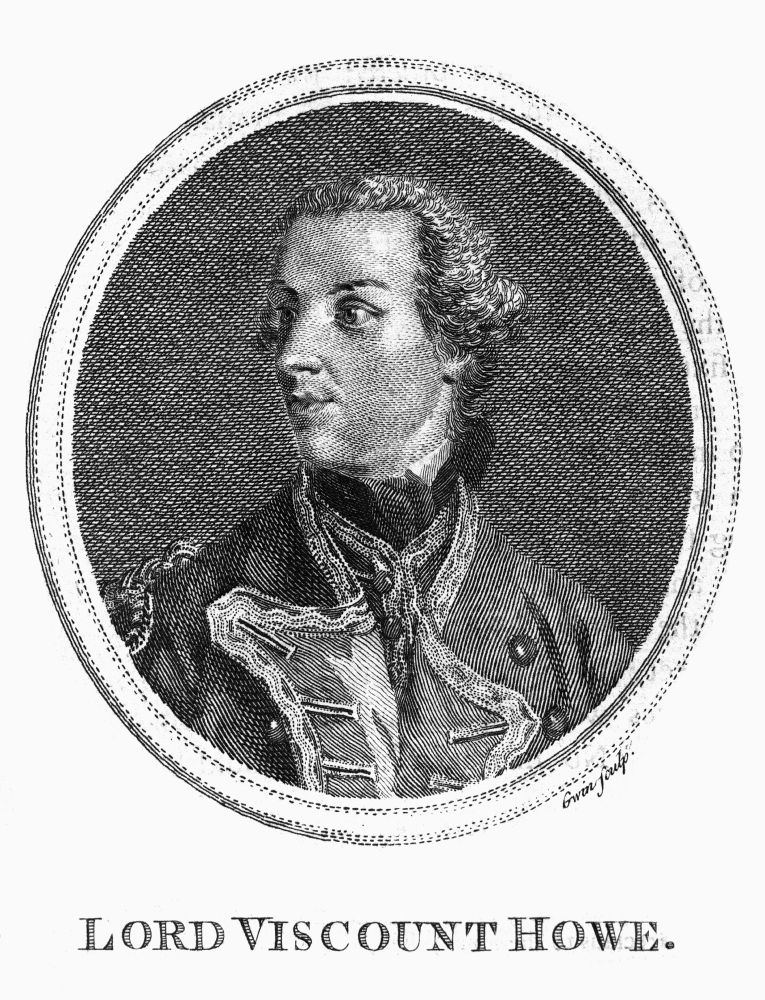
55th Regiment of Foot.  Colonel George Augustus, Viscount Howe.  This most likely shows him in the uniform of the 55th Regiment of Foot.  It is possible that this illustration shows him as colonel of the 60th Regiment, but it appears that the 60th's officers did not wear buttonhole lace.


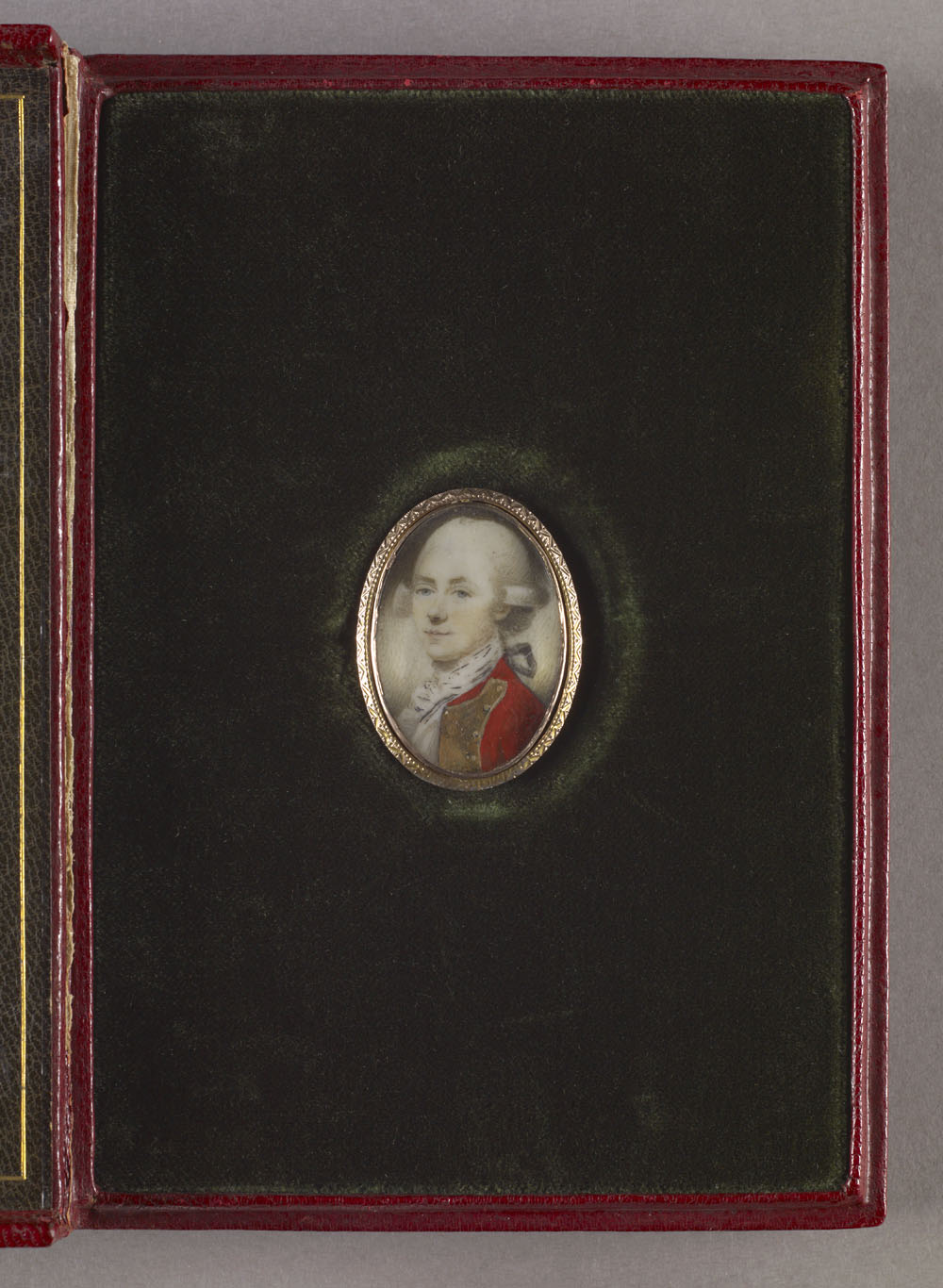
58th Regiment of Foot.  Lieutenant-Colonel William Howe. (Photo from Archives Canada https://collectionscanada.gc.ca/pam_archives/index.php?fuseaction=genitem.displayEcopies&lang=eng&rec_nbr=2834245&title=General%20Sir%20William%20Howe.&ecopy=c096944k)


60th Regiment of Foot.  Jeffrey Amherst, possibly as colonel of the 60th Regiment of Foot.  Alternately, this portrait may illustrate a general's "undress" uniform.


Monday, October 24, 2016

Uniforms of "Catriona" from Contemporary Pictures

Since I analyzed the uniforms of Robert Louis Stevenson’s popular novel Kidnapped, it is time to tackle the uniforms described in his sequel, Catriona.


The first time we encounter a soldier in this book (aside from a few unnamed privates arresting James More MacGregor) is in the character of Lieutenant Hector Duncansby, who challenges David Balfour to a duel with the intention of killing him. It is not stated what regiment Duncansby belongs to, so this makes it difficult (if not impossible) to determine his uniform.


The fact that Duncansby is specifically mentioned as a “Highland boy” could suggest an association with the 42nd “Black Watch” Highlanders. However, it is also stated that he clasped his hands under his coat’s skirt, and the Black Watch’s coat was specifically cut short (that is, without skirts) and designed to be worn over a kilt. It is likely that Duncansby belongs to the 1st Royal Scots Regiment, which also recruited Scottish personnel. Its coat skirts were of a conventional length and its officers carried smallswords, rather than the broadswords of the 42nd Highlanders. The illustration shows two British officers dressed in a conventional 1750s uniform.


After his run-in with Lieutenant Duncansby, Balfour arrives at Lord Advocate Prestongrange’s house. He spies some halberds tucked away in a corner and suspects that his arrest is near. These “halberds” are the polearms now known as Lochaber axes, and they were carried by the Edinburgh City Guard, who served as a police force for that city. Evidence for their unusual weaponry is found in the 1704 “Act For Regulating the City Guard.”
The re-created Edinburgh City Guard.
From facebook.com/edinburghcityguard


"That the Captain of the Guard cause two men of the best qualified in their guard walk nightly through the streitts with a large batton or poleaxe in their hand, who are hereby appointed to give notice immediately to the firemasters and guard in case of fire, and the said Captain is to take accompt of the diligence each morning and the Captain of the guard is always to keep a list of the firemasters and ane accompt of their dwelling places." (1)


Halkett's Regiment in Dutch service
David Balfour is not arrested by the Edinburgh City Guard, but is later kidnapped by a band of wild Highlanders and imprisoned on the Bass Rock. There, Andie Scougall tells a tale of his father Tam Dale, who served as a soldier on the Bass when it was a prison for Covenanters. The Bass Rock was garrisoned by an independent company (2), that is, a company that is not part of a regiment but serves on its own. The deputy-governor of the Bass Rock was Charles Maitland, later 4th Earl of Lauderdale (3).

Balfour is eventually reunited with his friend Alan Breck Stewart, who mentions that he has a cousin who serves in the Scots-Dutch Brigade, in Halkett’s Regiment. The Scots Brigade was a unit of 3 Scottish regiments who had served in the Dutch Army since 1572. Halkett’s Regiment was a unit in that brigade and its uniform is illustrated in the picture above.


Near the climax of the book, Balfour again meets Captain Hugh Palliser, who is an actual naval captain from history. (4) This picture (left) is an actual portrait of Captain Palliser in the uniform of a captain of the Royal Navy. The ship in the background (which also features in Catriona) is Palliser’s frigate the Sea Horse.


At the very end of the book, a company of French infantrymen manning Dunkirk’s garrison is mentioned. The illustration above shows French infantrymen’s uniforms of the 1750s.  The vast majority of French infantrymen wore grey-white coats.


This concludes our two-part study of the uniforms of Kidnapped and Catriona. Perhaps soon I will analyze the uniforms of another novel set in the 18th century.

Notes
(1)
https://www.facebook.com/edinburghcityguard/
(2) pg. 57, The History of the Uniforms of the British Army, volume 1, by C. C. P. Lawson.
(3) pg. 267, Memorials and Letters of John Graham of Claverhouse, Viscount Dundee, volume 2, by Mark Napier.
(4) pg. 69, Braddock’s Defeat by David Preston

Tuesday, September 13, 2016

Remembering Montcalm and Wolfe


On this day in 1759, British General James Wolfe and French General the Marquis de Montcalm met outside Quebec City in the Battle of the Plains of Abraham.  Both commanders died in the ensuing battle; Wolfe before the battle had even ended, Montcalm early the next morning.  These two pictures (with quotes) are a tribute to them.

On Wolfe's picture, his men are ascending to the plains of Abraham.  The quote "The Paths of glory lead but to the grave" is from Gray's Elegy in a Country Churchyard.  Wolfe reportedly claimed he would rather have written those lines than capture Quebec.  Wolfe's last words were "Now, God be praised, I will die in peace."

Montcalm's picture shows the wounded general replying to the concerned inquiries of Quebec's citizens: "The Marquis is killed!"  "It is nothing, do not weep for me, my good friends."  Montcalm spent his last hours writing to Brigadier-General Townshend asking him to treat the Canadians kindly, and praying.
 

Sunday, August 14, 2016

Alone Yet Not Alone Movie Review: Part 2


Alone Yet Not Alone
Released 2013
1 hour 43 minutes
MPAA Rating: PG-13


In my previous review (which can be read at http://defendingthelegacy.blogspot.com/2016/08/alone-yet-not-alone-movie-review-part-1.html), I dealt with the first half of Alone Yet Not Alone, with Natalie Raccosin in the leading role. The second half begins when Kelly Greyson takes the role of Barbara.


A title announces “Many years later” as the camera pans across the Indian village of Moschingo. But the “many years” they refer to is only 3 years later, in 1759. The movie itself gives multiple clues to confirm this date. In council, the chief mentions that Fort Duquesne has been captured by the English. The Indians decide to form a war party and join the French to retake Fort Duquesne. This points to some time later than 1758, for the British captured Fort Duquesne in November of that year. Yet it cannot be much beyond 1760, as all French troops surrendered in September of 1760. This fixes the date between 1758 and 1760.


Barbara is informed that the warrior Galasko wants to marry her. She determines (after some prodding by her friend and fellow-captive Marie) to escape. Her escape is facilitated by the fact that all of the Indian warriors (except the formidable Hannawoa) have gone to Fort Duquesne to aid the French in defeating the English. 


Again, this is another clue as to an early 1759 setting. The French evacuated Duquesne in November of 1758, so it is no surprise that this distant village of Delaware Indians has not yet learned of its abandonment.


Four English captives—Barbara, Marie, Owen, and David—steal a canoe and paddle away. But Hannawoa remains at the village, realizes that they have escaped, and embarks in pursuit of them. Through forest and stream, waterfall and rock, pursuer and pursued run. At last the foursome are within sight of Fort Pitt, a British outpost on the site of Fort Duquesne (which had been destroyed by the retreating French).  


In his travels, Hannawoa had come across his brother Galasko’s warband. Galasko follows Hannawoa in his pursuit, which irritates Hannawoa so much that he tomahawks his brother in the back. Coldly stealing his weapons (a musket and tomahawk), Hannawoa continues his pursuit of Barbara.


As the captives signal and shout at the fort for assistance, the British and colonists prepare to shoot them down. Fortunately for them, a British officer orders a halt while he asks permission to reconnoiter in a boat.  Several British regulars under Captain Thomas row across to determine whether these escapees are attempting to lure the garrison of Fort Pitt into an ambush. Barbara’s fluency with both English and German persuades them, and they quickly disembark—only to be challenged by Hannawoa.


Hannawoa’s first shot drops a Brit, while the British return volley succeeds in missing him entirely. The British then foolishly run at Hannawoa one by one (without bayonets!), and are hit by his tomahawks. Owen and David attempt to fight back, but one is quickly eliminated.  Captain Thomas, draws a pistol with historically accurate sangfroid and shoots Hannawoa in the shoulder. Yet again the Britisher is sent sprawling on the turf.


Moments from death, Barbara fumbles in Captain Thomas’s belt, draws another pistol and shoots Hannawoa, who is then skewered by a conveniently arriving Redcoat. This scene is undoubtedly the worst in the entire movie. Its historicity is not accurate; in fact, I wrote an entire blog post analyzing this one scene (read it at http://defendingthelegacy.blogspot.com/2016/02/british-regulars-from-movie-alone-yet.html)


The four captives are escorted into Fort Pitt, where they have supper and receive lodging for the night. Next morning, Captain Thomas (whose pistol Barbara borrowed) suggests that Barbara and Marie would like a warm bath and a soldier’s wife is quick to oblige. The soap used at Fort Pitt must be extremely strong, as it quickly strips the black dye from Barbara’s hair, returning it to blonde again. A dress worn by Colonel Mercer’s daughter conveniently fits Barbara to a T.


Escorted by the obliging Captain Thomas, Barbara and her friends enter Philadelphia, where she is reunited with her mother and brother. In the 5 years that follow (from 1759 to the end of 1763), the Leininger family raises good crops and becomes quite well-off. Barbara accepts a man named Fritz in marriage and on Christmas Eve of 1763, the entire family gathers together—with the poignant exception of Regina.


A knock pounds on their door, and rather than look out the large glass windows to identify the unexpected visitor, Fritz cocks a musket and points it at the door. When it is opened, it discloses the terrified face of the local Pastor Muhlenberg. Pastor Muhlenberg brings exciting if inaccurate news: “Colonel Armstrong and the Royal Americans have defeated the Ohio Indians!”


The battle that the Reverend refers to is the Battle of Bushy Run on July 3, 1763. There, a force of British and colonial troops defeated an Indian force in a two-day battle. Colonel Henri Bouquet commanded the British, and outfought the Indians with a cunning ambush and feigned retreat. Colonel Armstrong was not a part of the victory and only 16 men of the Royal Americans were part of Bouquet’s force! Actually, the 42nd Royal Highland Regiment and Montgomery’s 77th Highlanders comprised 390 men of Bouquet’s force, while the 60th Royal American Regiment (referred to by Pastor Muhlenberg) furnished only 16 men. (1)


Pastor Muhlenberg tells the Leininger family that Colonel Armstrong (it should be Colonel Bouquet) has insisted on the return of all English captives still left in the Indians’ towns as part of the peace treaty. They will be gathered at Fort Carlisle, and Mother and Barbara decide to journey there to find Regina.


They search through endless lines of captives and ask Colonel Armstrong for help. He inquires if Regina had any birthmarks, nicknames, or scars—anything that could identify her. This gives Mother Leininger an idea. Through the lines of captives she walks, singing a German hymn “Alone yet not Alone.” When Regina hears it, she recognizes the song and her mother and is reunited with them. The movie ends with a stirring performance of the song by Joni Eareckson Tada.


The second half of the movie is much weaker than the first. While the first half had good acting, many of the actors in the second half are flat, including Barbara, Owen, and David. However, some actors are good, such as Mother Leininger and Colonel Armstrong.


My score for the second half is 1/5 stars. The ending fight sequence and flat acting make this half much weaker than the first. The best part of the second half is Joni Eareckson Tada’s rendition of the hymn Alone Yet Not Alone.


My overall rating of Alone Yet Not Alone is 2/5 stars. I would recommend this movie for the scenery, some French & Indian War action, and some good performances by some of the actors. Perhaps the best commendation I can give it is to say that when I had finished watching it for the first time, I was eager to paint some French & Indian War figures and recreate this pivotal era for myself. (2)


Would you like to hear the song Alone Yet Not Alone? This video shows Joni Eareckson Tada's performance, as well as some of the best scenes of the movie.


References:

(1) pg. 90, Through So Many Dangers: The Memoirs and Adventures of Robert Kirk by Robert Kirk, Ian McCullough, and Timothy Todish

(2) To see some of my painted soldiers, visit my other blog Red Coats and Ruffles at www.redcoatsandruffles.blogspot.com

Monday, August 1, 2016

Alone Yet Not Alone Movie Review: Part 1


Alone Yet Not Alone
Released 2013
Length: 1 hour 43 minutes
MPAA Rating: PG-13


When this movie was first announced, I was excited. It was a movie set in one of my favorite eras—the French and Indian War! Perhaps it would include the indomitable James Wolfe, the courtly Marquis de Montcalm, or the daring Robert Rogers. Hopefully redcoated British regulars, blue-clad provincials and green-jacketed Rangers would clash with French regulars and painted Indians in epic battles! My sister disagreed with my hopes for the movie. She believed it would be a heart-stirring drama of two sisters who attempt to rebuild their lives in the midst of a war that turns their world upside down.
 
We were both wrong. Alone Yet Not Alone turned out to be neither what my sister nor I expected. This review will go through the movie’s story as well as a little of the history behind it. Because the movie naturally divides itself into two parts, I will divide my review the same way.

The year is 1755 and the Leininger family has immigrated into the colony of Pennsylvania. There they purchase land and begin a new life for themselves in the wilderness. They quickly plant crops and erect a house.

But trouble is brewing not far away. The pompous British General Edward Braddock dismisses his Indian allies, (against the advice of his superior aide named George Washington) claiming that the British will drive away the French without them. Understandably disturbed, the Indians switch alliances from the British to the French. The history portrayed here is simply absurd. Braddock did not drive away the Indians with his arrogance (for more on this subject, see my series called “The Trial of Edward Braddock” at
http://defendingthelegacy.blogspot.com/search/label/Braddock).  The Indians did not join the French because they were rebuffed by Braddock; instead the French had built relationships among the Indians, mainly through the fur trade.


The Delaware warrior Galasko examines the grotto where
Barbara and her sister are hiding
In council, the Delaware Indians decide to take up the hatchet against the British settlements. Two brother warriors named Galasko and Hannewoa descend on the Leiningers’ home when the mother and two brothers are away at town. In a brief fight (the most convincing in the entire movie), the Indians kill the father and the last brother before burning the house and crops to the ground. The Leinginers’ two daughters, Barbara and Regina, flee down the creek into a rocky grotto, but the Indians follow in a canoe and succeed in capturing the two sisters.

Barbara and Regina are marched through Pennsylvania to Fort Du Quesne, but they are separated when the war party they are travelling in breaks up. Regina is sent with one group of Indians while Barbara remains with another group. Barbara is heartbroken, so when an opportunity to rejoin Regina appears (in the shape of a horse), she takes it. Headlong she plunges through thickets in a vain attempt to find her sister. But she is quickly recaptured and sentenced to death. Help arrives from an unexpected source when Galascow intervenes, praising her courage.

Alone Yet Not Alone's portrayal of Fort Duquesne

The Delaware Indians make a journey to a French fortress called Fort Du Quesne. The scenes in Fort Du Quesne are some of the most visually beautiful in the entire movie. Compagnies Franches de la Marine and French militia garrison the fort as war parties of Indians pass through its gates. The year is 1756, a year of success for the French and Indians in their war against the British. Eventually Galasko and his band leave Fort Du Quesne and settle into the village of Kittanning.

Unbeknownst to Barbara and the Delawares, the Pennsylvania Assembly has finally voted to raise money to fight the French and Indians. The Quakers had not wanted to raise money for the military, so a band of irate Scotch-Irish and German settlers marched on Philadelphia. A circumlocution is introduced into the militia bill, agreeing to appropriate money “for the King’s use”. Because the Quakers are not voting to raise money for war, they reluctantly agree, and the bill is passed.

This account is true, but Pennsylvania also suffered from taxation issues: the Assembly wanted to tax the lands of the Penn family, while the Governor (who was their representative) could not agree to it. Eventually the situation was ironed out with a “gift” from the Penn family of 5,000 pounds to help pay for the militia. (1)

John Armstrong is appointed to command the militia of Pennsylvania (at least those west of the Susquehanna River) (2). Their first target is the Indian settlement of Kittanning Village.


Colonel Armstrong (center) prepares to advance
Colonel Armstrong (not Captain; he was promoted in March of 1756) and his raid on Kittanning are true pieces of history; however, they are poorly portrayed in this movie. First of all, Kittanning Village was a collection of about 30 log cabins, rather than the birch-bark wigwams shown in the movie. The raid actually began shortly after dawn, rather than in the afternoon. The Pennsylvania militia is shown as suffering most of their casualties from hand-to-hand fighting. Actually, the Indians positioned themselves in their cabins and engaged in a firefight with the militia. In his report, Captain Armstrong observes that "they seldom missed of killing or wounding some of our people." (3) The tables finally turn for the Pennsylvanians when they light the cabins on fire, causing them to explode because of the large amounts of gunpowder stored within. That would have made an interesting scene for the movie!

As Kittanning Village burns, one of the captives named Lydia attempts to escape with two captive children. She is caught (but the children are found by the Pennsylvanians) and sentenced to die by being burnt at the stake. Some time afterward, a French officer and his men arrive on the scene. This officer is attempting to conduct this war honorably, and torturing a prisoner is dishonorable. 

French lieutenant of the Compagnies Franches de la Marine
He is an important character in the movie, for he provides a counterpoint to the official in Fort Duquesne who is buying scalps. One conducted the war savagely, the other honorably. Yet the character of both were represented in the French military during the French & Indian War. To cite merely one example, Governor-General Vaudreuil meticulously counted the number of scalps brought in by Indians and sent that information to the Minister of Marine in France, while General Montcalm risked his life to save the English (his enemies) from the Indians (his allies) during the Fort William-Henry massacre.


Galasko, Hannawoa, Barbara and the rest of their Indian band return to Galasko’s village of Moschkingo. There Barbara and her friend and fellow-captive Marie settle into the ways of life there.  

Some characters that I believed did an excellent job in their roles include Lydia the English captive. She is an excellent motherly presence to this group of captured children. Barbara’s scene where she attempts to escape on a horse is another well-acted scene. The French lieutenant is devout and honorable, while Galasko and Hannowoa provide an interesting contrast to each other.


Lydia attempts to escape from Kittanning Village

The movie makes a natural break here, as young Barbara (Natalie Raccosin) becomes Barbara (Kelly Greyson). I would rate the first half of the movie 3/5 stars. Lydia and Fort Du Quesne are some of my favorite parts, but the erroneous portrayal of Braddock and the Kittanning raid bring the score down to 3/5. 

My next post will tackle the second half of the movie, with Kelly Greyson in the lead role.

(1) A fuller account of the financial wrangling in Pennsylvania can be found in Francis Parkman's classic Montcalm and Wolfe. Read it for free at
http://www.gutenberg.org/cache/epub/14517/pg14517-images.html (search for Chapter 13)

(2) pg. 18, Military Uniforms in America: The Era of the American Revolution 1755-1795 (San Rafael, CA: Presidio, 1975)

(3) pg. 258, Colonial Records of Pennsylvania. This source contains Colonel Armstrong's report to the Governor of Pennsylvania on the success of his raid. Available at:
https://archive.org/stream/colonialrecordsov7harr#page/n279/mode/2up

Sunday, July 24, 2016

The Trial of Edward Braddock--Part Fourth and Last


This is the fourth and last part of a series defending Edward Braddock against his detractors, specifically the movie Alone Yet Not Alone. Part 1 in the series can be found at:http://defendingthelegacy.blogspot.com/2016/04/the-trial-of-edward-braddock-part-1.html

Part 2 can be found at: http://defendingthelegacy.blogspot.com/2016/04/the-trial-of-edward-braddock-part-2.html

And Part 3 can be found at: http://defendingthelegacy.blogspot.com/2016/05/the-trial-of-edward-braddock-part-3.html

In Part 3, Charles Stuart charged Edward Braddock with slighting the Delaware Indians by insulting and self-confident language. Stuart’s narrative claims to be taken from the words of the Delaware chief Shingas, whom Stuart met while a captive. But what do other eyewitnesses say about Braddock’s interaction with the Delaware?

Captain Robert Orme was an aide-de-camp (assistant to General Braddock). Because of this position, he would have known much about any interactions the General had with others. This is how he describes the meeting:

“Some Indians arrived from the Delawars [sic], with whom the General conferred, and to whom he made presents. They promised to join him with their Nation upon the March, which they never performed.”—Captain Robert Orme


An important source of Braddock’s campaign is a journal known as the Seaman’s Journal, which was kept by Midshipman Thomas Gill. Haynes chronicles this meeting with the Delaware Indians thus:

“On the 28th:-- At 11, the Delawares met at the General’s tent, and told him that they were come to know his intentions, that they might assist the Army. The General thanked them and said he should march in a few days towards Fort De Quesne [sic]. The Indians told him they would return home and collect their warriors together, and meet him on his march.”—Seaman’s Journal, kept by Midshipman Thomas Gill

Not only does Gill make no mention of any altercation between the British and the Delaware, but he specifically states that Braddock thanked the Indians for their assistance.
The two previous authors were British, but this next testimony comes from a colonist named George Croghan. Croghan knew many Indians well; in fact, he was appointed Captain of Indians for Braddock’s expedition. These are his words regarding the conference:

"The general had a conference with these chiefs in company with those 50 I had brought with me and made them a handsome present, and behaved as kindly to them as he possibly could during their stay, ordering me to let them want for nothing. The Delawares promised in council to meet ye General on the road, as he marched out, with a number of their warriors, but whether the former breaches of faith on the side of the English prevented them, or that they had before engaged to assist the French, I cannot tell: but they disappointed the General and did not meet him.”—George Croghan (1)

Croghan specifically states that the General “behaved…kindly” towards the Indians. These three testimonies are powerful confirmation that Braddock did his best to establish good relations with the Indians. For more information on the real Braddock, and his interactions with the Delaware and other Indian tribes, check out the book Braddock’s Defeat by David L. Preston.

Why is this important? Edward Braddock met with some Indians. So what? Proverbs 17:15 states that “He that justifieth the wicked, and he that condemneth the just, even they both are abomination to the Lord.” This series has been written to right the record, to defend Braddock’s reputation against those who seek to distort and destroy his character.

(1) All of these eyewitness testimonies can be found in Winthrop Sargeant’s History of Braddock’s Defeat. This book can be read, for free, at: https://archive.org/stream/historyofexpedit00sarg#page/n5/mode/2up

Monday, May 23, 2016

The Trial of Edward Braddock part 3


The Charges Defended, by James Stuart and Chief Shingas


(To follow this story’s progression, read parts 1 and 2 first.  Part 1 can be read at: http://www.defendingthelegacy.blogspot.com/2016/04/the-trial-of-edward-braddock-part-1.html


The prosecuting attorney had listened to the testimony of the two witnesses much like a card player who holds the ace of trumps in his hand, or a chess player preparing to checkmate his opponent with the next move.  When Mrs. George Anne Bellamy stepped down from the witness box, the prosecutor arose.


“The witnesses for the defendant have given their evidence, and perhaps they are correct that Braddock treated fellow Europeans less brutally,” the prosecutor said smoothly.  “But what of his treatment of the Native Americans who were his allies?  I have evidence to confirm my original assertion that Braddock despised these masters of frontier warfare, leading to his defeat and death at the battle of the Monongahela.  Mr. James Stuart, will you take the witness box?”


A man in the dress of a frontier settler came to the witness stand and began.


“This testimony comes from Chief Shingas who met with General Braddock.  ‘That he with 5 other Chiefs of the Delaware Shawnee & Mingo Nations (Being 2 from Each Nation) had applied to General Braddock and Enquired what he intended to do with the Land [the Ohio Country] if he Could drive the French and their Indians away To which Braddock replied that the English Shou’d Inhabit & Inherit the Land, on which Shingas asked General Braddock whether the Indians that were Friends to the English might not be Permitted to Live and Trade Among the English and have Hunting Ground sufficient to Support themselves and Familys as they had no where to Flee Too But into the Hands of the French and their Indians who were their Enemies (that is Shingas' Enemies). On which General Braddock said that No Savage Should Inherit the Land. On receiving which answer Shingas and the other Chiefs went that night to their own People-To whom they Communicated General Braddock's Answer And the Next Morning Returned to General Braddock again in hopes he might have Changed his Sentiments and then repeated their Former Questions to General Braddock again and General Braddock made the same reply as Formerly, On which Shingas and the other Chiefs answered That if they might not have Liberty To Live on the Land they would not Fight for it To which General Braddock answered that he did not need their Help and had No doubt of driveing the French and their Indians away.’” (1)


Will the defendants have any answer to this eyewitness testimony against Braddock?  Stay tuned for part 4 of the Trial of Edward Braddock!

  1. http://explorepahistory.com/odocument.php?docId=1-4-1D
     

Wednesday, April 13, 2016

The Trial of Edward Braddock part 2


Part Second: Braddock's Character Defended, by Captain Robert Orme and George Anne Bellamy

An outcry broke in the court as the prosecutor finished.  Some applauded him, while others voiced their opposition.  A man in a red coat and blue cuffs leapt from his seat before being admonished to sit down.  “Every one’s evidence in turn, sir,” said the bailiff.

“Having heard the charge from the prosecution, we will now hear the evidence of the defendant’s character.  Captain Robert Orme, will you present your evidence?” asked the judge.


A portrait of Captain Robert Orme
“Certainly, my lords,” said the gentleman who had risen before.  Eagerly, he took the witness stand and, waiting for perfect silence and attention, began.

“My name is Robert Orme, and I am a lieutenant in the Coldstream Guards. (1)  I was an aide-de-camp to General Braddock, and served him during his appointment as Major-General.  I was with him from England to his untimely demise in battle against the perfidious French.”

“You were in close contact with the General then and can give us an estimation of his character?”

“Yes, my lords.  ‘I judge it a Duty to vindicate the Memory of a Man whom I greatly and deservedly esteemed…it is very hard [that] the bluntness and openness of a Man’s Temper should be called Brutality and that he who would hear Opinions more freely than any man should be accused of Obstinacy and Peremptoriness.’” (2)

Captain Orme sat down and the judge called on the next witness.


“The next witness is George Anne Bellamy, the famous actress.  Mistress Bellamy, will you present your evidence?”

“I was known to the general from my infancy.  (3) He became as a second father to me and before he departed to take command in the colonies, he left his will and silver plate with me.  ‘This great man having been often reproached with brutality, I am induced to recite the following little accident, which evidently shews the contrary.

"As we were walking in the Park one day, we heard a poor fellow was to be chastised; when I requested the General to beg off the offender.  Upon his application to the general officer, whose name was Drury, he asked Braddock, ‘How long since he had divested himself of brutality, and of the insolence of his manners?’  To which the other replied, ‘You never knew me insolent to my inferiors.  It is only to such rude men as yourself, that I behave with the spirit which I think they deserve.’" (4)


  1. The Foot Guards ranks were one higher than in the regular army; thus a lieutenant of the Guards would rank as a captain in the rest of the Army.  This was common practice among European household troops and explains why Orme is sometimes referred to as Lieutenant (his Guards rank), and sometimes as Captain (his effective rank on Braddock’s expedition).
  2. Letter of Captain Robert Orme, found on page xx. Braddock’s Defeat, edited by Charles Hamilton.
  3. pg. 177, An Apology for the Life of George Anne Bellamy.  Read it at: https://archive.org/stream/apologyforlifeof12bell#page/176/mode/2up
  4. pg. 29, An Apology for the Life of George Anne Bellamy.  Read it at: http://archive.org/stream/apologyforlifeof35bell#page/n39/mode/2up/search/braddock

Tuesday, April 5, 2016

The Trial of Edward Braddock part 1

Part First: The Charges Brought, by the movie Alone Yet Not Alone


It came to pass one day that I read a book telling the story of the French and Indian War.  As I read, I contemplated the characters who acted in it: George Washington, Sieur de Jumonville, the Half-King, and General Edward Braddock.  Braddock especially intrigued me.  Here was a man courageous in battle yet defeated and killed by Native American Indians and French Canadians.  Did Braddock’s defeat stem from the fact that he had no Indians on his side?  Was Braddock merely unfortunate, or did he deliberately drive his natives away, atoning for his mistake with his death?


I heard a slight noise as a gentleman in a red coat with gold lace sat down near me.  Looking up, I realized that I was in a courtroom, which was rapidly filling up.  Oddly enough, I sat in a chair in the middle of the court while benches in the two halves of the court contained the rest of the crowd.  On one side I noticed an Indian chieftain seated next to a pioneer settler; on the other, a female actress and a soldier in a red coat.  It was clear that every one was deeply interested in the case.  The audience was, probably wisely, separated into pro and con, defendants and prosecutors.


“Oyez!  Oyez!  Oyez!” shouted the bailiff.  “This honorable court will now come to order to consider the case of Edward Braddock.  In brief, the charges are as follows: Edward Braddock, major-general in the British Army under George II, conducted himself in the 13 colonies with arrogance, and treated with reckless contempt his Indian allies.  This neglect and dereliction of duty caused his defeat and death at the Battle of the Monongahela on July 9, 1755.  The prosecutor will now present his evidence.”


Edward Braddock, from the movie Alone Yet Not Alone
The prosecutor stepped forward and began to read as follows:


Colonel George Washington: “The chiefs of all six tribes request an audience with Your Excellency.”

General Edward Braddock: “Colonel Washington, can’t you see I have no time for savages?”

Washington: “Sir, the chiefs bring with them over 400 warriors.  They will prove invaluable as we near Fort Duquense.”

Braddock: “Invaluable?  Are you suggesting His Majesty’s finest regiments require the assistance of untrained, illiterate savages to win in this battle?”

Washington: “They are masters of stealth and ambush.  We can employ them to protect our flanks.  Your troops cannot shoot an enemy they cannot see.”

Braddock: “Washington, you weary me.  Very well.  Give me a moment and then show them in.”

Washington: “General Braddock, may I present the great Delaware chief, Shingas.

Chief Shingas of the Delaware: “General, my people have lived, hunted on these lands from the beginning of time.  Now we willingly share these lands with the English.  We join you in driving French from these lands.  We ask only once the French are gone, that you grant us lands for hunting to feed our children.”

Braddock: “Never!  Only the British shall inherit this land.”

Shingas: “General, we willingly take up the tomahawk against the French.  We defend your cause with our lives.”

Braddock: “His Majesty’s troops do not need you to win this battle.  No savage shall ever inherit this land.  Is that clear?  Now, begone.” (1)


  1. This transcript is from the movie Alone Yet Not Alone.  For more about this movie, see www.aloneyetnotalone.com

Monday, March 28, 2016

Review of Drummer Boy for Montcalm by Wilma Pritchard Hays


Drummer Boy for Montcalm

By Wilma Pritchard Hays, illustrated by Alan Moyler

Published 1959 by The Viking Press

187 pages, hardcover with dust jacket


“Word had come to France that England was preparing to besiege Quebec that summer of 1759, and both sides knew it was to be a fight to the finish.  Now as Peter Demo stood on the deck of the French ship bringing recruits, the twelve-year-old stowaway was bursting with excitement over his first view of the walled city built on a sheer cliff two hundred feet above the St. Lawrence.” (description from inside dust jacket)


The Story

The book opens with a short prologue: “England and France in the New World,” which tells the story of the English and French settlements in North America up to 1759. 

The story begins with the arrival of Peter Demo at Quebec.  Peter, an orphan, joins a ship of recruits sailing to reinforce General Montcalm’s army in Quebec.  There he befriends a courier du bois named Philippe d’Argons.  Peter wants to be a courier du bois himself, but first he needs money to get started.  He is accepted as a worker for the Grand Company of Associates, which he quickly discovers is a corrupt monopoly.   Peter and Philippe work to return stolen furs to the Indians and Peter has to leave his job with the Grand Company.  He then becomes a drummer boy with Montcalm’s forces, follows the French army during the siege of Quebec, and makes friends with an Indian named Bomazeen.  When Quebec finally surrenders, Peter and Bomazeen become fur traders in the region of Lake Champlain.  An epilogue details what happened to Peter Demo (who was a real person) and the Grand Company of Associates.


The History

On the dust jacket, Mrs. Hays states that she “followed closely the true incidents of battle, the details of weather and its effects upon the siege.”  This is a true statement, for her story is impressively researched.  This is no generic fiction that is randomly set in an era; rather this book is steeped in 1759 Quebec.  Commanders’ names and personalities are here.  Songs of the era are sung by the soldiers.  Even the thievery of the pompously named Grand Company of Associates is chronicled.


Interestingly, Mrs. Hays uses actual quotes for historic figures whenever possible.  The speech of the Ottawa chief is chronicled by Captain Bougainville in his journal (1).  Nearly all of General Montcalm’s lines are recorded in history.  In addition to its research, this book also has a chronology for the siege of Quebec in the back of the book.


Lastly

This book is a labor of love, and a charming look at the 1759 siege of Quebec. 

Highly recommended. 5/5 stars. 

The book’s best quote comes from the Abbe.  When talking to Peter, he says: “Le bon Dieu (the good Lord) did not promise always to do what we ask.  He promised always to be with us—whether it rains or shines.”


  1. pg. 145, Adventure in the Wilderness: the American Journals of Louis-Antoine de Bougainville (University of Oklahoma: 1990)